Lysine: The Essential Amino Acid for Skin, Collagen, Immunity & Viral Health
/By Laura Michelle Powers: Celebrity Psychic, Author, and host of Healing Powers Podcast
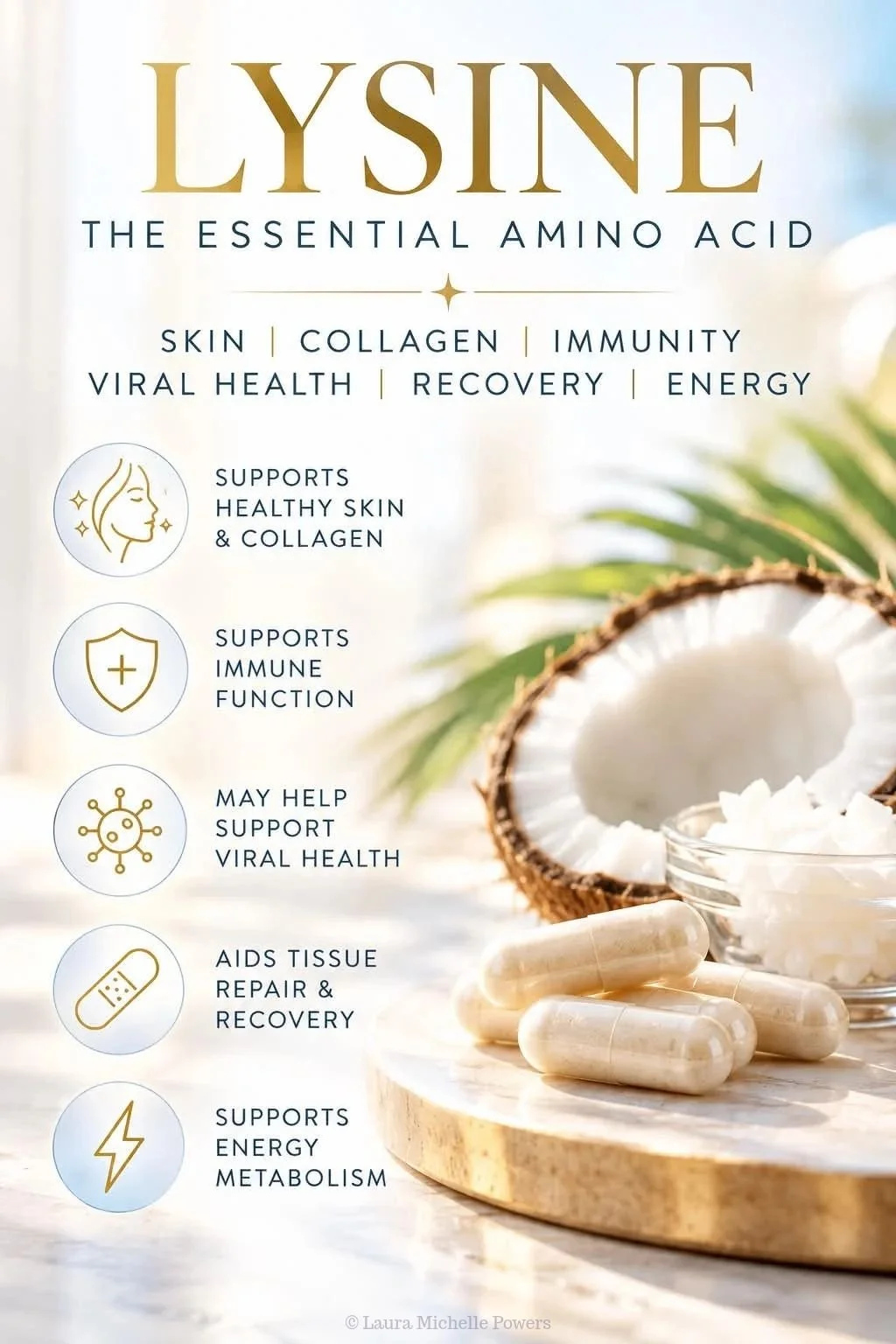
When we think about supporting our immune system, we often hear about vitamin C, zinc, and vitamin D. But there’s another important nutrient that deserves some attention: lysine!
Lysine, also known as L-lysine, is an essential amino acid that plays an important role in everything from healthy skin and collagen production to immune function, tissue repair, and energy metabolism.
It’s also gained attention for its potential role in supporting people who experience recurring cold sores and other viral concerns.
So why is lysine so important, what can contribute to low lysine availability, and who might benefit from getting more?
Let’s dive in!
Why Lysine Is So Important
Lysine is one of nine essential amino acids. This means your body cannot manufacture it on its own, so you must obtain it through food or supplementation.
And while it’s often associated with cold sores, lysine actually supports several important functions throughout the body.
Skin Health & Collagen Production
Lysine plays an essential role in collagen formation. Collagen is the structural protein that helps keep our skin strong, firm, and resilient.
It’s also important for connective tissue, tendons, ligaments, and wound healing.
Adequate lysine helps your body maintain and repair these tissues. While additional supplementation hasn’t been proven to reverse skin aging, ensuring you have enough lysine is an important part of supporting healthy skin from the inside out.
Immune System Support
Your immune system relies on amino acids to produce antibodies and other proteins involved in defending your body.
Getting enough lysine supports normal immune function, especially when your overall protein intake is inadequate.
Tissue Repair & Recovery
Whether you’re recovering from exercise, injury, or illness, lysine contributes to the proteins your body needs to rebuild and repair tissues.
Energy Metabolism
Lysine helps your body produce carnitine, a compound involved in transporting fatty acids into the mitochondria, where they can be used for energy.
Lysine and Viruses: What’s the Connection?
One of the most popular uses of supplemental lysine is for recurring cold sores caused by the herpes simplex virus (HSV-1).
Researchers became interested in lysine partly because of its relationship with another amino acid called arginine.
Arginine plays a role in herpes simplex virus replication, and researchers have investigated whether lysine may influence this process.
Some small studies suggest that lysine supplementation may help reduce the frequency of cold sores, while others have found little or no benefit.
Although the evidence remains mixed, this relationship has made lysine a popular supplement among people interested in natural approaches to viral wellness.
Lysine has also been discussed in connection with other viruses, including shingles and Epstein-Barr virus, although reliable human research supporting those uses is currently lacking.
It’s important to distinguish lysine’s established nutritional benefits from its still-unproven antiviral applications.
What Can Contribute to Low Lysine Availability?
Because lysine is an essential amino acid, our bodies depend on a regular supply.
Several factors can contribute to inadequate lysine intake or availability.
Low Protein Intake
People who don’t consume enough protein may not receive adequate amounts of essential amino acids, including lysine.
Restrictive Diets
Diets that rely heavily on foods relatively low in lysine may not provide enough of this important nutrient.
Digestive and Absorption Issues
Certain digestive conditions can interfere with nutrient absorption, potentially affecting the body’s ability to obtain essential amino acids.
Increased Nutritional Needs
Growth, pregnancy, illness, and recovery from injuries may increase overall protein requirements.
Diets Very High in Nuts
Here’s something interesting!
Many nuts, including almonds, walnuts, and peanuts, contain substantially more arginine than lysine.
Eating nuts doesn’t directly deplete lysine from your body. However, if nuts make up a significant portion of your protein intake and replace more lysine-rich foods, your overall lysine intake may be relatively low.
For people who experience recurring cold sores, the relationship between lysine and arginine has attracted particular interest. However, research hasn’t established that avoiding arginine-rich foods reliably prevents outbreaks.
The goal is nutritional balance rather than unnecessarily eliminating otherwise nutritious foods.
Who Might Benefit from Extra Lysine?
While most people consuming sufficient amounts of varied protein can meet their lysine requirements, certain individuals may benefit from paying closer attention to their intake.
These include:
People with inadequate protein intake: Ensuring sufficient lysine supports normal immune function, tissue maintenance, and recovery.
People recovering from injury: Lysine contributes to collagen formation and tissue repair.
People following restrictive diets: Those whose diets rely heavily on low-lysine protein sources may benefit from evaluating their amino acid intake.
People experiencing recurring cold sores: Some individuals explore lysine supplementation, although research on its effectiveness remains mixed.
People focused on skin and connective tissue health: Lysine is an essential building block for collagen, making adequate intake important for maintaining healthy skin and connective tissues.
The important thing to remember is that getting enough lysine is essential, but taking more than your body needs doesn’t necessarily provide additional benefits.
The Lysine/Monolaurin Connection
Another interesting compound that can be paired with lysine in natural wellness routines is monolaurin.
Monolaurin, also known as glycerol monolaurate, is a compound derived from lauric acid, a fatty acid naturally found in coconut oil and human breast milk.
It’s attracted attention for its antimicrobial properties, including laboratory findings involving certain bacteria, fungi, and enveloped viruses.
Some viruses have a fatty outer membrane called a lipid envelope. In laboratory settings, monolaurin has demonstrated the ability to disrupt certain lipid membranes.
Why combine lysine and monolaurin?
What makes this combination interesting is that the two compounds have different proposed mechanisms.
Lysine has been studied for its potential influence on herpes simplex activity, while monolaurin has been investigated for its effects on microbial membranes.
The theory is that they may complement one another, although human clinical research hasn’t yet established that combining them produces additional antiviral benefits.
My Personal Experience
I’ve personally experimented with combining lysine and monolaurin and noticed a positive difference in my skin.
The supplement I’ve used combines equal amounts of L-lysine and monolaurin.
Lysine is essential for collagen formation and tissue repair, while monolaurin has demonstrated interesting antimicrobial properties in laboratory research.
Although I can’t necessarily attribute the changes in my skin to either ingredient individually, I’ve found the combination beneficial in my own experience.
And it’s one reason I wanted to share more about these compounds!
Tips for Supplementing with Lysine and Monolaurin
If you’re curious about incorporating lysine and monolaurin into your wellness routine, there are a few things worth understanding.
Lysine Dosage
Lysine supplements commonly contain 500–1,000 mg per serving.
Clinical studies investigating recurring cold sores have explored daily amounts ranging from approximately 1,000 to 3,000 mg, with mixed results.
These are amounts studied in research rather than universally recommended doses.
Monolaurin Dosage: Does Amount Matter?
One interesting consideration with monolaurin is the amount being used.
Some natural wellness protocols and supplement manufacturers discuss gram-level amounts rather than just a few hundred milligrams daily.
However, human research hasn’t established an effective oral dose for viral support, and higher amounts aren’t necessarily more beneficial or safer.
This is an area where individual experiences and supplement protocols have moved ahead of the available clinical evidence.
An Example of a Combination Supplement
One supplement I’ve personally used is Solaray L-Lysine Monolaurin, which contains a 1:1 ratio of the two compounds.
Each two-capsule serving provides:
* 500 mg L-lysine HCl
* 500 mg monolaurin
* 1,000 mg total combined ingredients
The manufacturer’s suggested serving is two capsules daily.
This is one example of how the two ingredients can be combined in a single supplement.
A Few Helpful Tips
Introduce supplements individually when possible so it’s easier to understand how your body responds.
Pay attention to the amount of each ingredient rather than just the total supplement weight.
Consider tracking changes in your skin, digestion, or other wellness goals.
Be mindful of digestive discomfort or other unwanted reactions.
Remember that more isn’t necessarily better, particularly when research on optimal dosing is limited.
Consistency can also be helpful when evaluating your experience, since changing multiple things at once makes it harder to know what’s making a difference.
Supporting Your Body from the Inside Out
One of the things I love about exploring natural wellness is recognizing how interconnected everything is.
Our skin, immune system, digestion, energy production, and recovery processes all depend on having the right nutritional building blocks.
Lysine is a wonderful example of how one essential nutrient contributes to so many important functions throughout the body.
And while monolaurin offers an intriguing area for further research, it’s important to recognize the difference between promising laboratory findings and benefits that have been established in humans.
I also believe there’s value in paying attention to our own experiences while continuing to learn and explore the science.
Ultimately, supporting wellness isn’t about taking as many supplements as possible. It’s about understanding what your body needs and making informed choices that help it function at its best.
Sometimes the most powerful way to support your body’s natural resilience is to give it the essential building blocks it needs to thrive!
⸻
A quick note: I’m sharing this information to help you explore your own wellness journey, including some of my personal experiences. Everyone’s body is different, so what works for one person may not work the same way for another. Do your own research, pay attention to how your body responds, and make the choices that feel right for you. This isn’t meant to replace medical advice or treatment.