Open Your Lymph Pathways: Simple Massage Techniques to Support Healthy Lymph Flow
/By Laura Michelle Powers: Celebrity Psychic, Author, and host of Healing Powers Podcast
The lymphatic system is one of the most overlooked systems in the body, yet it plays an important role in immune function, fluid balance, and waste removal. Unlike your circulatory system, which has the heart to pump blood, your lymphatic system relies on movement, breathing, muscle contractions, and gentle stimulation to keep lymph flowing.
If you’ve been feeling puffy, sluggish, or like your body needs a reset, supporting your lymphatic system may be one helpful piece of the puzzle.
Why Lymph Flow Matters
The lymphatic system is a network of vessels and lymph nodes that helps transport immune cells, proteins, and excess fluid throughout the body. When lymph flow slows, fluid can accumulate in tissues, and some people may notice:
Puffiness or mild swelling
A feeling of heaviness
Temporary water retention
Sluggishness
Increased muscle tension
Many factors can contribute to slower lymph movement, including prolonged sitting, dehydration, illness, surgery, and lack of physical activity.
The Gentle Approach Works Best
Unlike deep tissue massage, lymphatic massage uses very light pressure. The lymphatic vessels sit just beneath the skin, so pressing harder is not necessarily better. Gentle, rhythmic stretching of the skin is often all that’s needed to encourage movement of lymph.
Think of it as guiding the fluid rather than forcing it.
Open the “Drainage Points” First
A common mistake is trying to move fluid from the hands, feet, or legs before creating space for it to drain.
Many lymphatic therapists begin by gently stimulating the larger drainage areas closest to the center of the body before working outward.
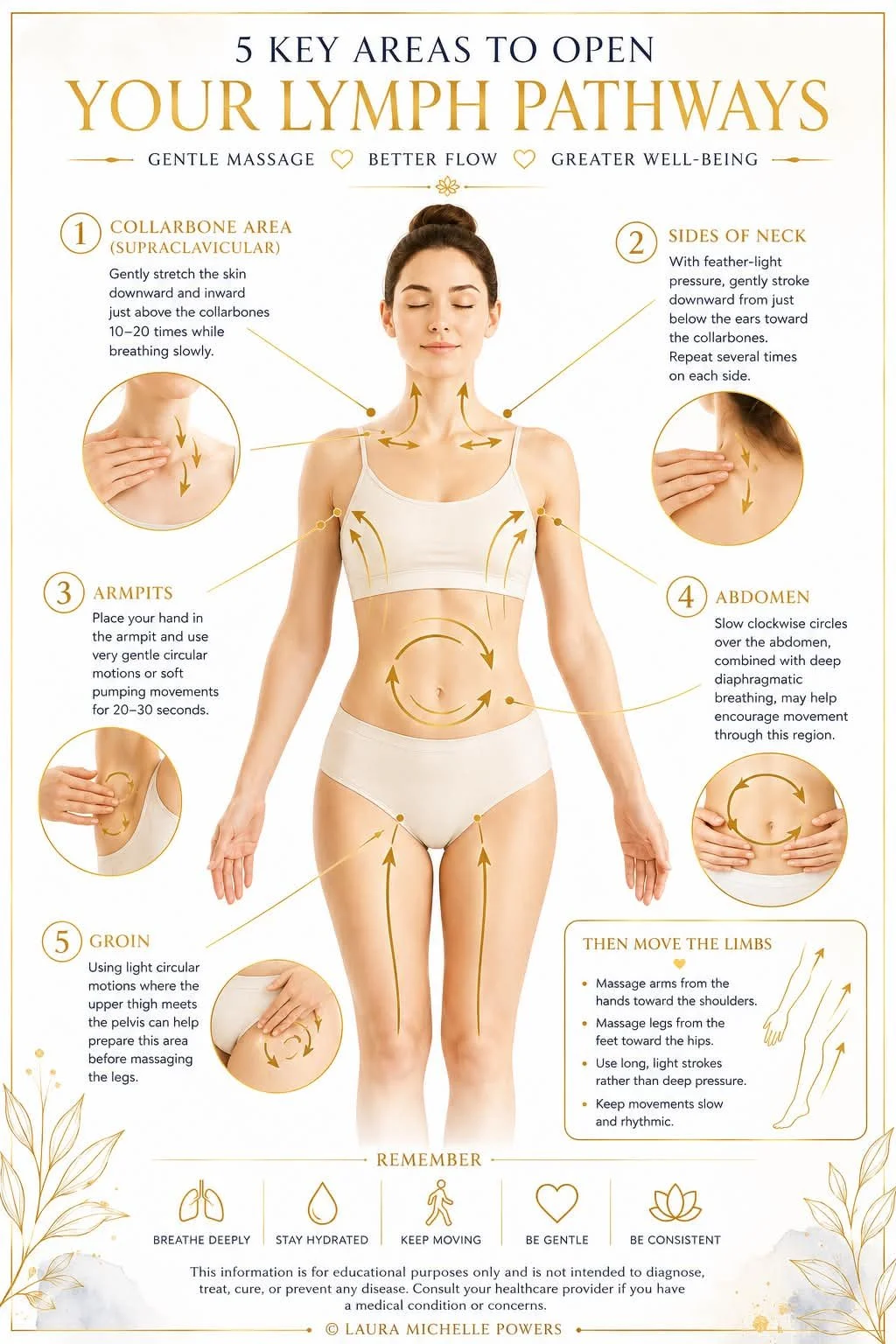
1. Collarbone Area (Supraclavicular Region)
This is one of the major drainage areas where lymph returns to the bloodstream.
Using your fingertips, gently stretch the skin downward and inward just above the collarbones 10–20 times while breathing slowly.
2. Sides of the Neck
With feather-light pressure, gently stroke downward from just below the ears toward the collarbones.
Repeat several times on each side.
3. Armpits
The axillary lymph nodes are major collection points for the upper body.
Place your hand in the armpit and use very gentle circular motions or soft pumping movements for 20–30 seconds.
4. Abdomen
The abdomen contains an extensive network of lymphatic vessels.
Slow clockwise circles over the abdomen, combined with deep diaphragmatic breathing, may help encourage movement through this region.
5. Groin
The inguinal lymph nodes drain much of the legs.
Using light circular motions where the upper thigh meets the pelvis can help prepare this area before massaging the legs.
Then Move the Limbs
Once you’ve gently opened the central drainage pathways:
Massage arms from the hands toward the shoulders.
Massage legs from the feet toward the hips.
Use long, light strokes rather than deep pressure.
Keep movements slow and rhythmic.
Remember: less pressure is usually more effective.
Other Ways to Encourage Healthy Lymph Flow
Massage is just one part of supporting the lymphatic system. Other helpful habits include:
Walking regularly
Gentle rebounding on a mini trampoline (if appropriate for you)
Deep diaphragmatic breathing
Staying well hydrated
Stretching and mobility work
Dry brushing (for those who tolerate it well)
Swimming and other low-impact movement
Wearing loose-fitting clothing that doesn’t excessively restrict circulation
When to Be Cautious
Lymphatic massage isn’t appropriate for everyone. Talk with your healthcare provider before trying it if you have:
An active infection or fever
Untreated blood clots
Certain heart conditions, including uncontrolled heart failure
Severe kidney disease
Certain cancers or are undergoing cancer treatment (unless specifically cleared by your oncology team or certified lymphedema therapist)
If you have lymphedema or significant swelling, it’s best to work with a certified lymphatic or lymphedema therapist who can tailor treatment to your needs.
A Whole-Body Perspective
The lymphatic system thrives on movement—not intensity. A few minutes each day of gentle massage, deep breathing, hydration, and regular activity can support your body’s natural fluid balance and overall well-being.
One of my favorite reminders is that healing doesn’t always require doing more. Sometimes it comes from creating the conditions that allow the body to do what it was beautifully designed to do.
This article is for educational purposes only and is not intended to diagnose, treat, cure, or prevent any disease. Always consult your healthcare provider before beginning a new wellness practice, particularly if you have a medical condition.